
U.S. Naval War College Programs
Established in 1884 as an advanced course of professional study for naval officers, the U.S. Naval War College educates and develops leaders at specific stages in their careers from all services, U.S. government agencies and departments, and international navies.
Research, Wargaming & Publications
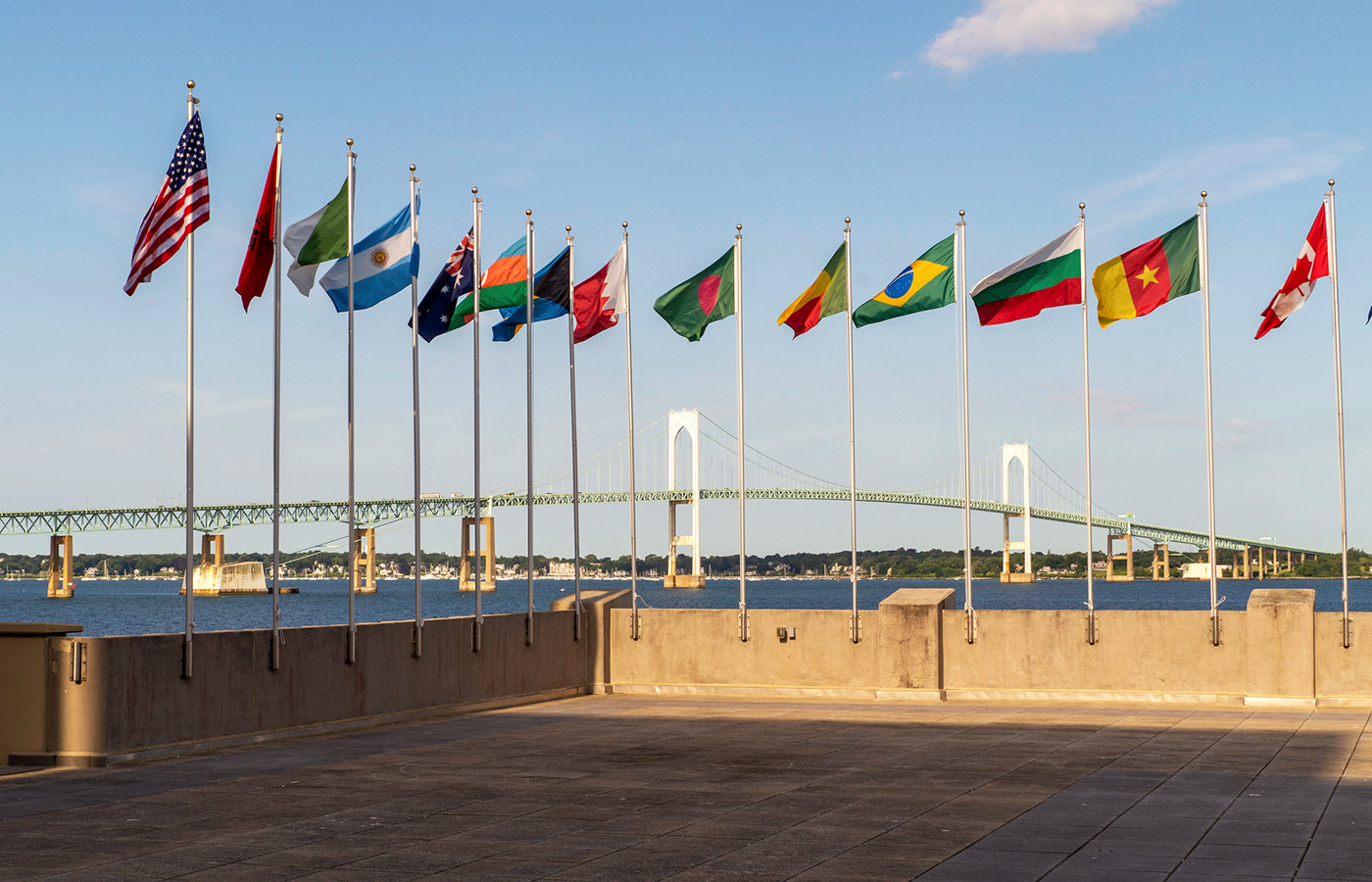
Scholarship and Research
Nearly a century after Stephen B. Luce founded the U.S. Naval War College as “a place of original research on all questions relating to war and the statesmanship connected with war, or the prevention of war,” the Center for Naval Warfare Studies was established within the College for broadly based, advanced research on the naval contributions to national strategy. The Center has complemented the curriculum at the U.S. Naval War College by providing a place for dedicated research that fuels our mission to educate future leaders, helps to define the future U.S. Navy, and informs national policy.
Featured Faculty Member

James R. Holmes
James Holmes holds the J. C. Wylie Chair of Maritime Strategy at the Naval War College and served on the faculty of the University of Georgia School of Public and International Affairs. A former U.S. Navy surface-warfare officer, he was the last gunnery officer in history to fire a battleship’s big guns in anger, during the first Gulf War in 1991. He earned the Naval War College Foundation Award in 1994, signifying the top graduate in his class. His books include Red Star over the Pacific, an Atlantic Monthly Best Book of 2010 and a fixture on the Navy Professional Reading List. General James Mattis deems him “troublesome.”
Recent Publications
The opinions expressed in these works are those of the authors alone and do not reflect official positions of NWC, the Department of the Navy, or Department of Defense.Traversing the Belt and Road: The World According to China and China According to the World
Boot Camp for the Mind: The Role of JPME in Developing National Security Strategists
Boot Camp for the Brain: AI and Professional Military Education
At the U.S. Naval War College
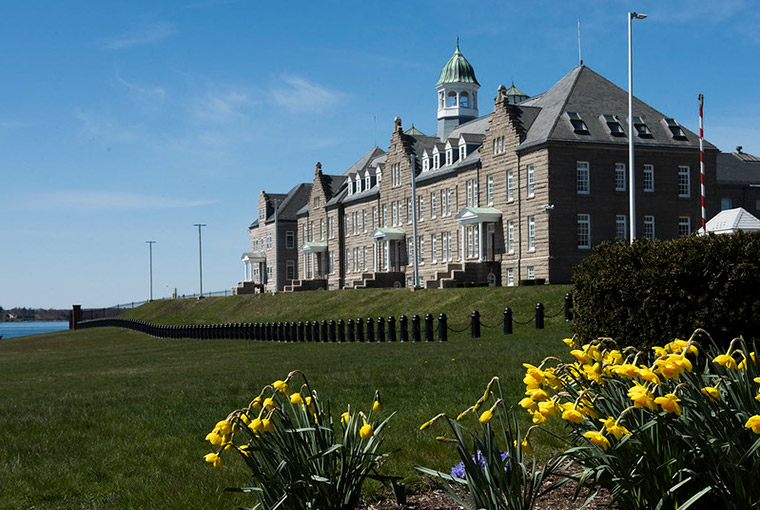
Welcome Incoming Students
Congratulations on being selected to attend the U.S. Naval War College (NWC)! The NWC faculty and staff look forward to your arrival and the opportunity to get to know you and work with you during your time here.
Indo-Pacific Military Leaders Gather for 2026 U.S. Naval War College Flag-Level Course in Hawaii
Naval War College Review
U.S. Naval War College Graduation
U.S. Naval War College Podcasts
Incoming Students
Resident Students
Naval Station Newport is home to 50 military commands, educational institutions, and services. While your focus will be on academics, you’ll also have the opportunity to enjoy what the city of Newport and the naval station have to offer.

Distance Education Students
The U.S. Naval War College (NWC) distance education programs were designed to fit into the geographic and time constraints of students unable to participate in our traditional residential program. The College of Distance Education at NWC offers access to the same rigorous curriculum and world-class faculty.
International Students
The U.S. Naval War College welcomes senior and midcareer officers from navies around the world. Each year, we bring together U.S. and international students from diverse cultures to share their maritime traditions, experiences, and challenges.
NWC Featured Alumni
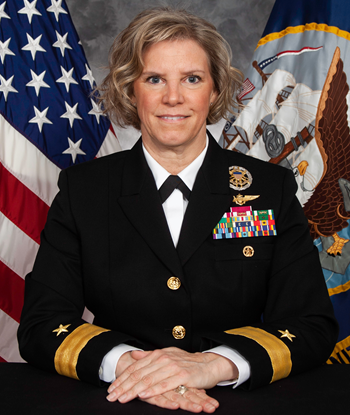
Rear Admiral Amy N. Bauernschmidt
Rear Adm. Amy N. Bauernschmidt is a native of Milwaukee, Wisc. and 1994 graduate of the U.S. Naval Academy with a BS in Ocean Engineering. She earned an MA in from the Naval War College and was designated a Naval Aviator in 1996 with over 3,000 flight hours in naval aircraft. Her sea tours include the Helicopter Anti-submarine Squadron Light 45 twice with USS John Young; aide-de-camp to Commander, Carrier Strike Group 7 with USS John C. Stennis; HSL-51 twice aboard USS Kitty Hawk; executive and commanding officer of Helicopter Maritime Strike Squadron 70 aboard USS George H.W. Bush; and executive officer of USS Abraham Lincoln. Her tours ashore include instructor pilot and quality assurance officer of HSL-41; executive assistant and action officer to the Director, Joint Staff/J6; and senior military advisor to the Secretary of State’s Office of Global Women’s Issues. Her awards include the Legion of Merit, Defense Meritorious Service Medal, Meritorious Service Medal, Navy/Marine Commendation Medal, Navy and Marine Corps Achievement Medal and various unit, campaign and service medals.
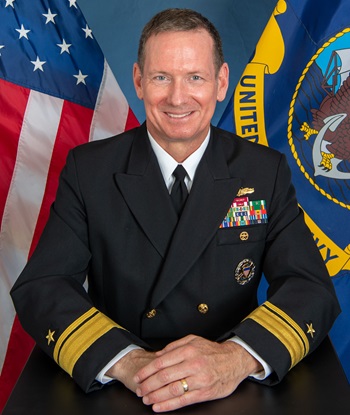
Rear Admiral Erik J. Eslich
Rear Adm. Erik J. Eslich is a native of Fort Lauderdale, Florida. He attended the United States Naval Academy and the Naval War College and is currently Director, Maritime Operations, U.S. Pacific Fleet. At sea, he was Commander of Carrier Strike Group Twelve and served aboard USS Lake Erie, USS Wasp, and USS Oscar Austin. He was executive officer for both USS O’Kane and USS Ramage. Ashore, he served as a U.S. House of Representatives case officer, Office of Legislative Affairs; executive assistant to Commander, Naval Surface Force Atlantic; global requirements officer at the Joint Integrated Air and Missile Defense Organization; surface warfare community manager at the Bureau of Navy Personnel; executive assistant to the Deputy Commander and Commander at U.S. Fleet Forces Command; and Deputy Commander at U.S. Seventh Fleet. His decorations include the Legion of Merit, Defense Meritorious Service Medal, Navy Meritorious Service Medal, Navy and Marine Corps Commendation Medal, Navy and Marine Corps Achievement Medal, and various campaign and service medals and ribbons.
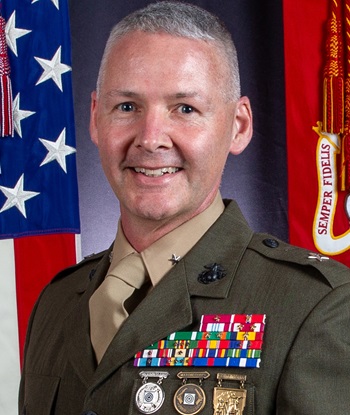
Brigadier General Matthew Tracy
Brigadier General Matthew Tracy is the Commanding General, Education Command and President, Marine Corps University. He was educated at The Basic School, Expeditionary Warfare School, College of Naval Command and Staff, and College of Naval Warfare at the U.S. Naval War College. His command assignments include Platoon Commander and Executive Officer with 3d Battalion, 8th Marines; Company Commander of 2d Battalion, 3d Marines; Battalion Commander of 3d Battalion, 3d Marines; and Commanding Officer of the 4th Marine Regiment. Staff assignments include Future Operations and Plans Officer at U.S. Marine Corps Forces, Pacific and Future Operations Officer at U.S. Special Operations Command. He has served as Assistant Chief of Staff, War Plans (G5) and Operations (G3) for III Marine Expeditionary Force. Most recently, he served at Headquarters, Marine Corps as the Future Operations Branch. His many awards and decorations include Legion of Merit, Bronze Star, Defense Meritorious Service Medal, Meritorious Service Medal, and the Combat Action Ribbon.
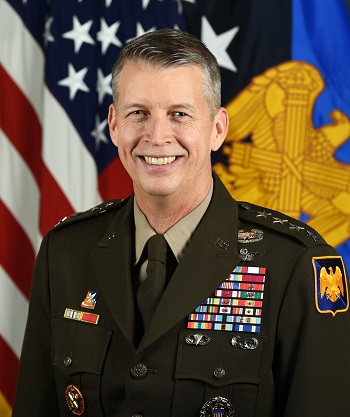
General Daniel R. Hokanson
General Daniel Hokanson is Chief of the National Guard Bureau and a Joint Chiefs of Staff member. In his role, he serves as an adviser on military matters to executive level departments. Additionally, he is the Department of Defense’s National Guard liaison to state-level leaders. Previously, he served as the Director of the Army National Guard, and as the Vice Chief of the National Guard Bureau. Daniel R. Hokanson graduated from the United States Military Academy and served in multiple aircraft test organizations before joining the Oregon National Guard. He has multi-level command experience, served as the Adjutant General of Oregon, and in the North American Aerospace Defense Command. His multiple combat deployments included commands of an Infantry Brigade Combat Team and as Chief of Staff for Combined Joint Task Force Phoenix. General Hokanson was also a member of the United States World Helicopter Team and founded the National Guard’s first Military Assistance to Safety and Traffic (MAST) and Military Air Rescue Team (MART) program.
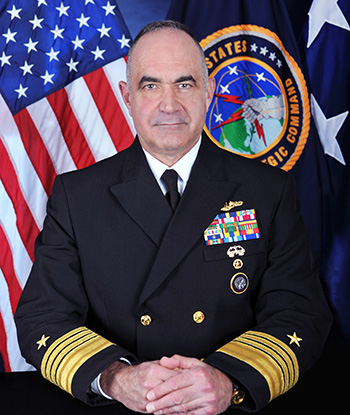
Admiral Charles A. Richard
Decatur, Alabama native Admiral Charles Richard graduated from the University of Alabama and earned master's degrees from the Catholic University of America and the U.S. Naval War College. His operational assignments include multiple submarine commands. Staff assignments include executive assistant and naval aide to the Under Secretary of the Navy; chief of staff, Submarine Force Atlantic; director of resources on the staff of the Under Secretary of Defense; squadron engineer on the staff of SUBRON-8 and duty on the Deputy Chief of Naval Operations staff. He has served as a member of Chief of Naval Operations' Strategic Studies Group XXVIII, as well as being Deputy Commander, U.S. Strategic Command, Director of Undersea Warfare (OPNAV N97), Deputy Commander of Joint Functional Component Command for Global Strike, and command of Submarine Group 10. His most recent assignment was Commander, Submarine Forces in Norfolk, Virginia. As Commander, U.S. Strategic Command, he is responsible for one of 11 Unified Commands under the Department of Defense.
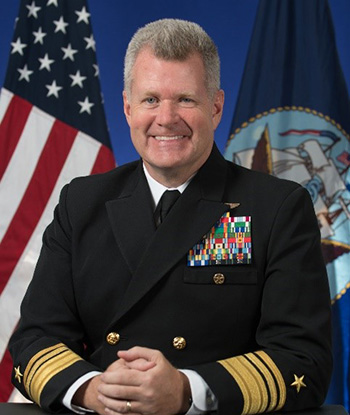
Adm. Samuel Paparo
From a maritime family, Samuel Paparo graduated from Villanova University and was commissioned in 1987. He earned an MA from Old Dominion University and an MS from the Naval Postgraduate School. A graduate of the Air Command and Staff College, the Air War College, the Naval War College, the Joint and Combined Warfighting School, and the TOPGUN program, he has flown over 6,000 hours and has over 1,000 carrier landings. His multiple operational command tours include, at sea: Carrier Air Wing 7, and Carrier Strike Group Ten, and, on the ground: Provincial Reconstruction Team with the 3rd Brigade, 10th Mountain Division and the 173rd Airborne Brigade. Paparo has additional joint operational service, shore assignments and Executive staff tours, including the staff of Commander, Naval Air Forces, director of Operations, J3, U.S. Central Command, and Battle Director at the Combined Air and Space Operations Center, Al Udeid, Qatar. Before assuming command of U.S. Pacific Fleet, his most recent assignment was U.S. Naval Forces Central Command/U.S. 5th Fleet/Combined Maritime Forces.
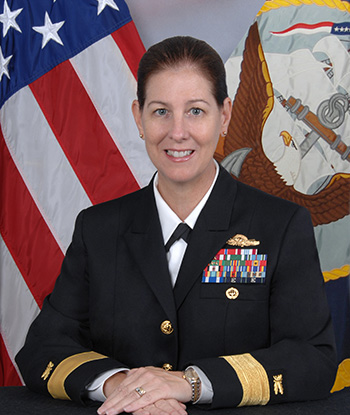
Rear Adm. Jacquelyn McClelland
A native of Ocean City, New Jersey, Rear Adm. McClelland graduated from Temple University in 1987, was commissioned in 1990, and earned her MA from Boston University in 2006. She was also a graduate of the U.S. Naval War College Command and Staff Program. She had multiple Navy Reserve (NR) supply, contracting and logistics assignments, including several overseas, as well as multiple command tours. McClelland mobilized in 2009 as commanding officer, DLA Support Team – Afghanistan, embedded with the Army’s 101st Airborne Division. She deployed again in 2010 as the deputy group commander, Navy Expeditionary Logistics Support Group Forward, supporting Operation Iraqi Freedom and Operation Enduring Freedom. A qualified Navy Expeditionary Supply Corps officer, McClelland assumed duties as commander, Navy Expeditionary Logistics Support Group in 2019. In her civilian career, she is a retired special agent with the Internal Revenue Service, Criminal Investigation who was assigned to the FBI Joint Terrorism Task Force, Washington, District of Columbia.
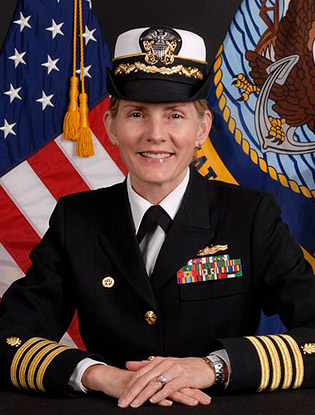
Capt. Mary Elizabeth Neill
Born in Baltimore, Md., Capt. Mary Elizabeth Neill has been part of the Dental Corps for more than three decades. Captain Neill received her B.S. from University of Maryland Baltimore County, her Doctor of Dental Surgery from University of Maryland College of Dental Surgery, her M.S. from University of Texas Health Sciences Center at San Antonio and her M.S. National Security and Strategic Studies 2016 from the U. S. Naval War College. Neill has held many positions (deputy chief of staff for Navy Medicine National Capital Area, executive officer at Naval Hospital Oak Harbor, commanding officer at Naval Health Clinic Quantico, Navy Medicine East chief of staff, commanding officer of NATO Role III Multinational Medical Unit Kandahar, Afghanistan, and deputy director for Medical Resources, Plans, Policy at the Pentagon) and has deployed in Operation Desert Shield/Desert Storm and Operation Enduring Freedom.
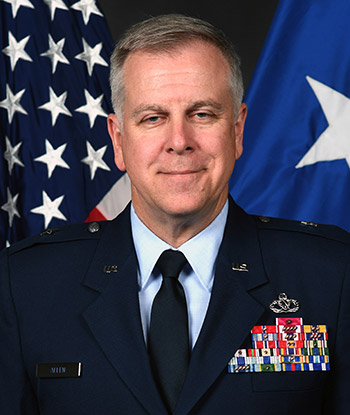
Brig. Gen. John J. Allen Jr.
Brig. Gen. John Allen is the Air Force director of civil engineers, deputy chief of staff for Logistics, Engineering & Force Protection, Headquarters U.S. Air Force, the Pentagon, Arlington, Virginia. He is responsible for providing policy and oversight for the planning, development, construction, maintenance, utilities and environmental quality of 183 Air Force bases worldwide valued at more than $297 billion. This responsibility includes housing, fire emergency services, explosive ordnance disposal and emergency management services. He also influences resourcing for installation support functions with an annual budget of $11 billion and is the focal point for organizing, training and equipping the 51,000-person engineering force. Brig. Gen. Allen's education includes a bachelor's degree in civil engineering from Virginia Tech, a Master of Science in engineering management from the University of Alaska Anchorage, and a Master of Arts in national security and strategic studies from the U.S. Naval War College.